Key Highlights
- IIJS Bharat – Signature 2026 concludes with an estimated ₹75,000 crore in business expected over the next three months
- Participation from 25,000+ domestic buyers and 1,400 international buyers from 40 countries
- Launch of JewelStart, GJEPC’s startup mentorship and incubation initiative
- Strong focus on exports, FTAs, sustainability, responsible sourcing and retail expansion
- Growing demand for lightweight, minimalist jewellery and advanced manufacturing technologies
The 18th edition of IIJS Bharat – Signature 2026, organised by the Gem & Jewellery Export Promotion Council (GJEPC), concluded in Mumbai, delivering a strong opening to the global gem and jewellery trade calendar for 2026.
As the first major B2B jewellery exhibition of the year, the show set a distinctly bullish tone for the industry, with an estimated ₹75,000 crore in business expected to be realised over the next three months.
Robust Domestic and International Buyer Participation
IIJS Bharat – Signature 2026 attracted over 25,000 domestic trade buyers from more than 800 cities across India, underscoring resilient domestic demand. Its expanding international footprint was reinforced by the presence of 1,400 international buyers from 40 countries, along with 12 high-level international delegations, highlighting sustained global interest in Indian-crafted gold, diamond, silver and lab-grown jewellery.
High-Profile Inauguration Across Two Venues
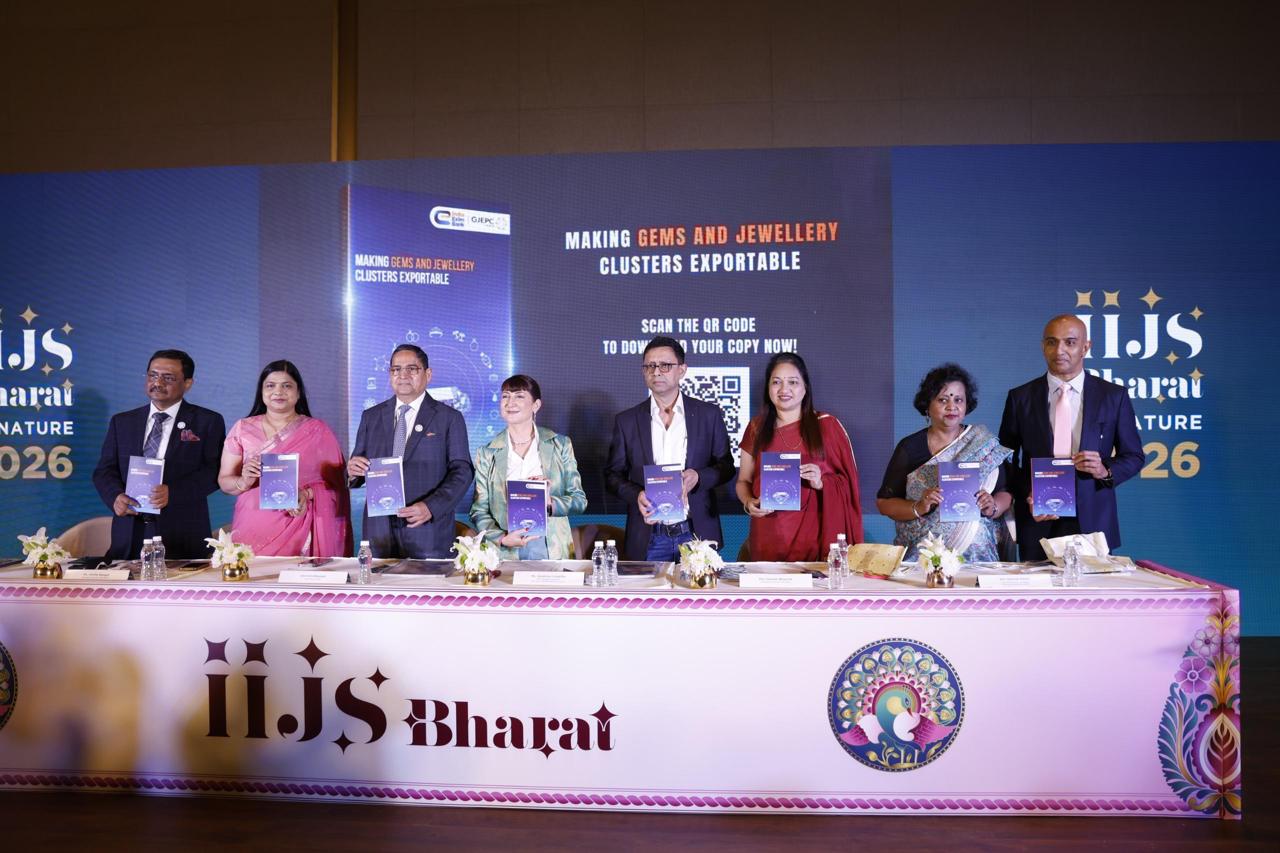
The inauguration of IIJS Bharat – Signature 2026 was held across both venues in Mumbai. The opening ceremony at the Jio World Convention Centre on 8 January was graced by Chief Guest Sandrine Conseiller, CEO, De Beers Brands and Chair, Natural Diamond Council. Guests of Honour included Ms. Harsha Bangari, Managing Director, EXIM Bank, and Mr. Saumen Bhaumik, Managing Director, CaratLane.
The ceremonial inauguration at the Bombay Exhibition Centre (NESCO) on 9 January was attended by Guests of Honour Mr. Neeraj Agarwal, Ambassador-Designate of India to Mauritania (West Africa), and Mr. Arun Narayan, CEO – Jewellery Division, Tanishq, along with senior leadership of GJEPC.
Industry Outlook and Export Momentum
Commenting on the successful conclusion, Mr. Kirit Bhansali, Chairman, GJEPC, said that IIJS Bharat – Signature 2026 has sent a clear and confident signal for the year ahead.
He noted that the estimated ₹75,000 crore in business reflects the scale, credibility and momentum of India’s gem and jewellery industry. With sustained demand across gold, diamonds, coloured gemstones, silver and lab-grown jewellery, he reaffirmed the industry’s long-term vision of achieving USD 100 billion in exports by 2047, driven by innovation and global partnerships.
JewelStart Launch Strengthens Innovation Pipeline
A key highlight of the exhibition was the launch of JewelStart, a new GJEPC initiative designed to mentor startups and emerging entrepreneurs in the jewellery sector. The programme aims to nurture innovation, support MSMEs and create a future-ready talent pipeline for the industry.
Crafts Pavilion and Artisan Engagement
The Crafts Pavilion at IIJS Bharat – Signature 2026 witnessed strong engagement from buyers and designers, with visitors interacting closely with National Award-winning artisans and traditional craft techniques. Several participants initiated discussions to explore collaborations and integrate heritage craftsmanship into contemporary jewellery collections.
IGJME Bharat – Signature Expands the Manufacturing Ecosystem
Further expanding the scope of the event, IGJME Bharat – Signature 2026 was inaugurated alongside IIJS Bharat – Signature in Mumbai. The dedicated machinery and technology exhibition showcased advanced manufacturing solutions, cutting-edge equipment and allied services, creating an end-to-end sourcing and production platform for the global jewellery industry.
Market Trends and Consumer Preferences
This year’s exhibition highlighted a strong preference for jewellery priced below ₹5 lakh, reflecting a shift toward classic minimalism and “no-clutter” designs built for longevity. While diamond bridal sales showed marginal moderation, fancy-cut diamonds—particularly pear-shaped and marquise stones—delivered standout performances.
Organic gems, especially pearls, are witnessing renewed interest, while coloured gemstones such as tanzanite emerged as a leading alternative to blue sapphire. Demand remained strong for stones in the 1 to 10 carat range, with price points between USD 50 and USD 200 per carat, depending on quality.
Manufacturing Evolution and Technology Adoption
Rising metal costs are accelerating a shift toward 18-karat gold, even in markets that traditionally preferred higher purity. Technology-led manufacturing has enabled metal weight reductions of up to 15%, while 3D manufacturing has entered the bridal segment, achieving weight savings of up to 40% compared to traditional handmade designs.
As the curtains fall on this landmark edition, IIJS Bharat – Signature 2026 has reaffirmed India’s position at the centre of the global jewellery trade, setting the stage for sustained growth and export momentum in the year ahead.