
Ships carrying apparel from Tamil Nadu to Los Angeles were on the high seas in February when American tariffs on Indian exports plunged again and again—first, with the announcement of the much-anticipated trade deal between the two countries, and then with the intervention from the US apex court.
Since US importers aka buyers are required to pay duties only after consignments land on their shores, they could reap a windfall from the goods in transit. Tariff rates dropped from a punitive 50 per cent in August last year to 18 per cent in the beginning of February and then to a bearable 10 per cent a couple of weeks later.
Meanwhile, in Tiruppur, Tamil Nadu, exporters were thinking on their feet and working the phones. “This is where we needed to be smart enough to renegotiate the price,” says N Thirukkumaran, chairman of Esstee Exports India, Tiruppur. “After all, the duty saved by buyers can always be adjusted in the next order.”
However, most exporters decided not to stir the water. They chose not to press the buyers to refund the gains since shipments were made under the Free on Board (FoB) mechanism. Under FOB, the seller is responsible for the goods till they are loaded onto a vessel and the rest is borne by the buyer.
Apparel from Tiruppur, India’s knitwear capital, which exported garments worth Rs16,000 crore to the US in 2024-25, is transported by road to the port of Thoothukudi. From there, feeder vessels carry containers to a mother ship anchored off Sri Lanka, which then begins a two-month voyage to the US.
“Some clients may return the amount; some may not,” says Thirukkumaran.
Welcome to the quiet, behind-the-scenes negotiations between Indian exporters and US buyers amid tariff convulsions.
Stitch in time
Over the past few months, it has been a delicate game of margins, trust and survival. Business leaders in different time zones—separated by oceans—found themselves making late-night calls and renegotiating contracts, shipment by shipment. In many cases, exporters chose to absorb razor-thin margins—and even losses at times—to safeguard relationships painstakingly built over decades.
For their part, US buyers did trim orders, but many stopped short of walking away. Instead, they chose to retain long-standing suppliers, agreeing to shoulder a portion of the burden to keep partnerships intact.
“For exporters supplying to American buyers, midnight is the peak working hour here. We sleep late and wake up late,” says KM Subramanian, Chairman of KM Knitwear and President of the Tiruppur Exporters’ Association. Subramanian says the town—home to nearly 2,000 exporters and 20,000 factories—lost an estimated Rs1,000 crore in revenue due to the discounts they extended to US buyers to cope with the tariff spike. “Only a few large brands could raise retail prices in the US. For the rest, there was no option but to shoulder a major share of the burden,” he explains, adding that the announcement of an India-US interim trade framework, with reduced tariffs, has brought immense relief. “The entire Tiruppur town is happy,” he says.
“When the news of the 18 per cent tariff came on our official WhatsApp group, I couldn’t believe it. I immediately called A Sakthivel for confirmation,” recalls Subramanian.
Sakthivel is among the town’s largest exporters and currently serves as Chairman of the Gurgaon-headquartered Apparel Export Promotion Council (APEC).
“The order from the US Supreme Court that followed was double cheer for us,” says Subramanian. In a landmark judgment on February 20, the apex court struck down President Donald Trump’s sweeping global tariffs, compelling the administration to impose a uniform 10 per cent rate instead. Though Trump said he would raise it to 15 per cent, it remains 10 per cent for all countries.
Buzz is back
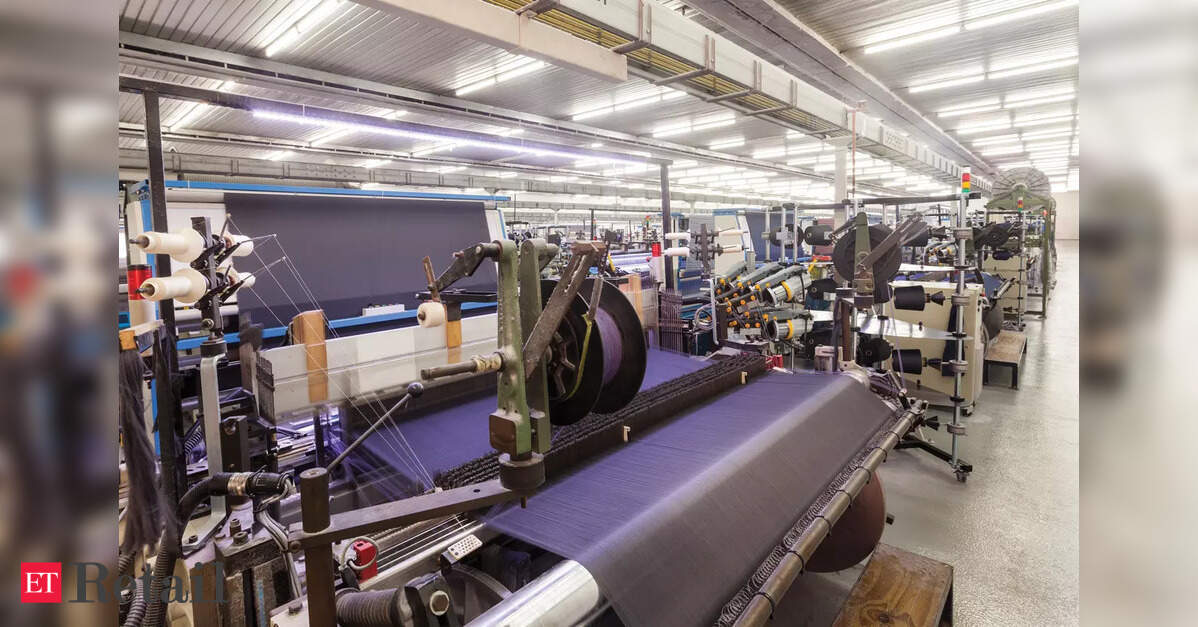
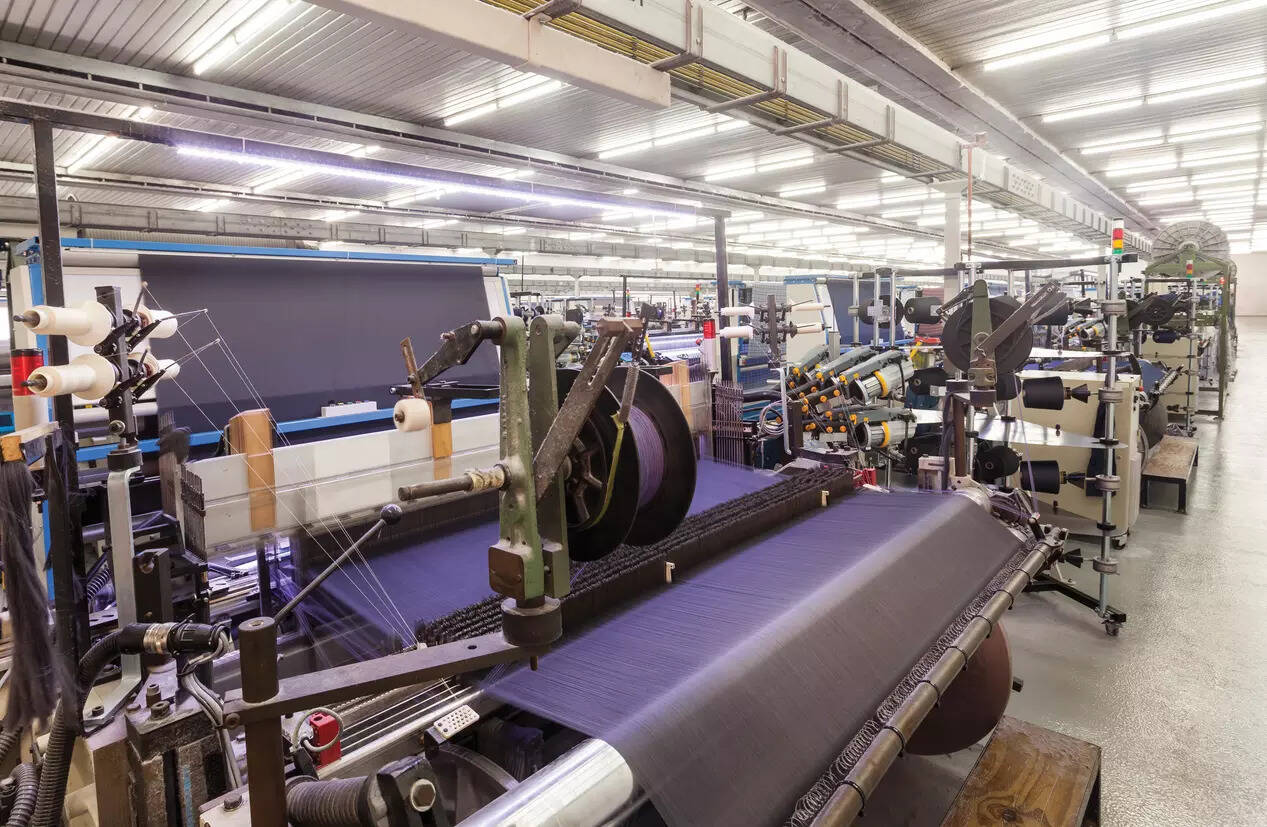
On the factory floor in Tiruppur, there is the buzz of work—and relief. Owners and managers move briskly between units. Workers are busy spreading and cutting fabrics, stitching seams and packing cartons. Until recently, they say, the atmosphere was sombre and business conditions volatile.
“When Trump levied a 10 per cent tariff in April last year, we discussed the matter with our buyers and decided to split it 50:50—you absorb 5 per cent, I absorb 5 per cent,” says R Gopalakrishnan, Chairman of Royal Classic Mills and one of the town’s leading exporters to the US. “Since that 10 per cent applied to every country, buyers readily agreed to share the burden.”
“No doubt, we had some tense moments,” says M Anand, a buying agent representing a Los Angeles-based client that regularly orders crew-neck T-shirts. “During the tariff turbulence, most exporters negotiated hard and absorbed a substantial portion of the duty and penalty through discounts.”
Gopalakrishnan says the real strain in buyer-supplier negotiations surfaced when tariffs on Indian goods climbed to a steep 50 per cent, with no clarity on when—or whether—they would be rolled back. “I have seven buyers in the US, and all of them told me categorically that it would be impossible for them to share such a heavy burden. They were clear that the 25 per cent penalty component—linked to India’s purchase of Russian oil—would have to be borne by us,” he says.
He likens the Trump tariff to an accident—sudden and without warning—but adds that exporters initially believed careful negotiations might still carve out a middle path. “After all, the tariff shock was less threatening than the pandemic, and we survived that.”
At least two exporters reveal that some large US buyers, who operate factories in East Asian countries, even floated the idea of shifting part of the value chain—while Indian firms would manufacture the fabric, garment production would be elsewhere. The proposal did not take off as relocating or reconfiguring supply chains across countries is far from simple.
During the turbulent tariff phase, most exporters managed to retain every single buyer, even though overall order volumes declined sharply. After all, buyers need the merchandise—Indian apparel has become an integral link in the global value chain.
Exporters in Tiruppur say their American clients largely refrained from raising the maximum retail price (MRP) of the final product, but they adjusted elsewhere—trimming the generous discounts typically offered during festival sales and at the end of the season.
“American retail customers did not pay higher prices, but they certainly received far fewer discounts during the last winter season,” says another exporter, requesting anonymity.
Shock wave
Beyond textiles, sectors such as seafood, leather and gems & jewellery also bore the brunt of Trump tariffs. They all confronted the same uncertainty and pressure that garment companies in Tiruppur did.
Vinod Sharma, MD of Noida-based Deki Electronics, describes the period as “a test of relationships” between exporters and their US buyers. His company, which supplies components such as capacitors to the US market, conducted a market survey last summer to explore expansion opportunities. “By the time the survey report came in, India was hit with a 50 per cent tariff,” he says. “We shelved our plans to expand in the US.”
“Negotiating at every stage of the tariff’s rise and fall is simply not practical. Electronics supply contracts are typically long-term in nature,” Sharma adds.
Cut to millet trade. Hiren Ahir, owner of Surat-headquartered Kashi Exports, supplies millet-based products to parts of the US. As his consignments sailed from Hazira to Texas when tariffs spiked, negotiations with buyers became a constant exercise. “Our buyers need the product and an easy substitute isn’t available,” he says. “They absorbed the hit and passed the additional cost to consumers. I did not give any discount—but my export volumes dropped sharply.”
After six months that were nothing short of “nightmarish”, today Ahir is a relieved man.
Is it over?
The questions haunting exporters and buyers are deceptively simple: Is the tariff turbulence truly over, or have recent developments merely pressed the pause button? If duties remain at 10 per cent or 15 per cent for most nations, why should India settle for an 18 per cent rate under a bilateral trade deal?
Some of these questions may resurface once the ongoing conflict in West Asia subsides and global attention shifts back to trade policy.
In Tiruppur, the opinion is divided. One camp believes the worst is behind them—that a 10 per cent or even an 18 per cent tariff will not derail business in the long run. The other remains wary, arguing that exporters should avoid overexposure to the American market at least until Trump’s term concludes in 2029.
Thirukkumaran of Esstee Exports, who currently sends 90 per cent of his apparel shipments to EU and just 10 per cent to the US, is keen to increase his American exposure. “There is no doubt that the US is the highest-consuming market in the world. How can you ignore a market like that? On average, an American spends about $2,000 a year on apparel and footwear—by far the highest globally,” he says.
Gopalakrishnan of Royal Classic Mills, whose US exposure once stood at 85 per cent before dropping to 50 per cent, takes the opposite view. “I am not celebrating yet,” he says. “Where is the certainty in Trump’s regime?” Instead, he plans to reduce his US share to 35 per cent and deepen his presence in EU, UK, Australia and other markets.
In Tiruppur, there is no unbridled jubilation—only a strange blend of relief and anxiety. As exporters place calls to buyers abroad and exchange notes with sourcing agents in town, the dilemma remains—chase the world’s most lucrative consumer market despite policy unpredictability, or pivot to steadier geographies with fewer shocks? For now, the machines hum again, but the calculations have not stopped.
‘It’s too early to celebrate’
R Gopalakrishnan, Chairman of Royal Classic Mills and one of Tiruppur’s leading knitwear exporters to the US, is relieved that US tariffs have been reduced. Yet, sitting in his sprawling factory—which generates an annual turnover of Rs8,000–9,000 crore and employs 6,000 workers—he strikes a cautious note. Relief, he insists, is not the same as certainty. And certainty remains elusive, he says:
Till the summer of last year, 85 per cent of our export business was with the US. I made my first shipment to America back in 1998, and the business kept growing until high tariffs hit us. The US market remained ideal for us because, unlike EU, there is just one language there. The population is large and affluent, and order sizes are invariably huge.
Today, my exposure to the US has come down to 50 per cent after that turbulent period of high tariffs. Even though tariffs have now been reduced, I want to play safe. I intend to bring down our US exposure further to 35 per cent and expand more into EU, UK, Australia and other markets. The last few months were nightmarish.
When Trump first imposed a 10 per cent tariff last year, we discussed the matter with our buyers and decided to split the burden 50:50. Since that 10 per cent tariff applied to every country, our buyers readily agreed to split it.
The real problem began when that 10 per cent was increased to a whopping 50 per cent, including the penalty portion for India’s purchase of Russian oil.
For us, no immediate alternatives were available. I employ about 6,000 people. My fixed costs—from electricity bills to loan repayments—had to continue. Securing a new customer is never easy; it can take up to six months.
The main concern was that we had no clarity on when things would normalise. By January, when we began incurring significant losses, the question was: should we forget the US market altogether for the rest of Trump’s term? Just as we started thinking along those lines, a social media post appeared: ‘My good friend Modi…’. Tariffs were slashed.
But I am not celebrating yet. When Diwali comes, you celebrate. The same goes for Christmas or New Year. But no one celebrates a tariff reduction in Trump’s regime. Where is the certainty? Even though US tariff is now back to 10 per cent after the court’s intervention, I tell fellow exporters not to celebrate just yet. It is still too early. If a war ends, citizens should not celebrate immediately. Let the last bullet stop.
The great tariff swing
April 2, 2025 – US imposes 26 per cent tariff (10 per cent baseline + additional reciprocal duties) on Indian goods
Impact: No immediate disruption
April 7–9, 2025 – US suspends reciprocal duties; 10 per cent tariff remains
Impact: Most exporters and buyers agree to equally share the 10 per cent burden
July 31, 2025 – Fresh 25 per cent tariff announced, effective August
Impact: Buyers express concern but agree to absorb part of the burden
August 27, 2025 – Additional 25 per cent penalty linked to India’s purchase of Russian oil pushes total tariff to 50 per cent
Impact: Exporters bear a large share of the shock, often at a loss; export volumes decline sharply
February 2, 2026 – Under India-US interim trade framework, tariffs reduced to 18 per cent
Impact: Major relief; buyers regain pricing comfort and trade flows stabilise
February 20, 2026 – US Supreme Court strikes down the recent sweeping tariffs
Impact: Relief for exporters though policy uncertainty continues
February 24, 2026 – A new 10 per cent uniform global tariff comes into effect
Impact: A manageable reset; business returns to normal rhythms
Source: News reports, ET’s interactions with exporters and buying agents